Advanced Nuclear Reactors
→ What are advanced nuclear reactors?
Advanced, or “Generation IV,” reactors are the next stage of technology that uses nuclear fission to generate electricity. Many kinds of advanced reactors are being designed and developed. While most older reactors—like existing large light-water reactors (LWRs) in the U.S.—use water to cool the core and prevent overheating, advanced reactors use alternative coolants like liquid metal, gas, or molten salt.
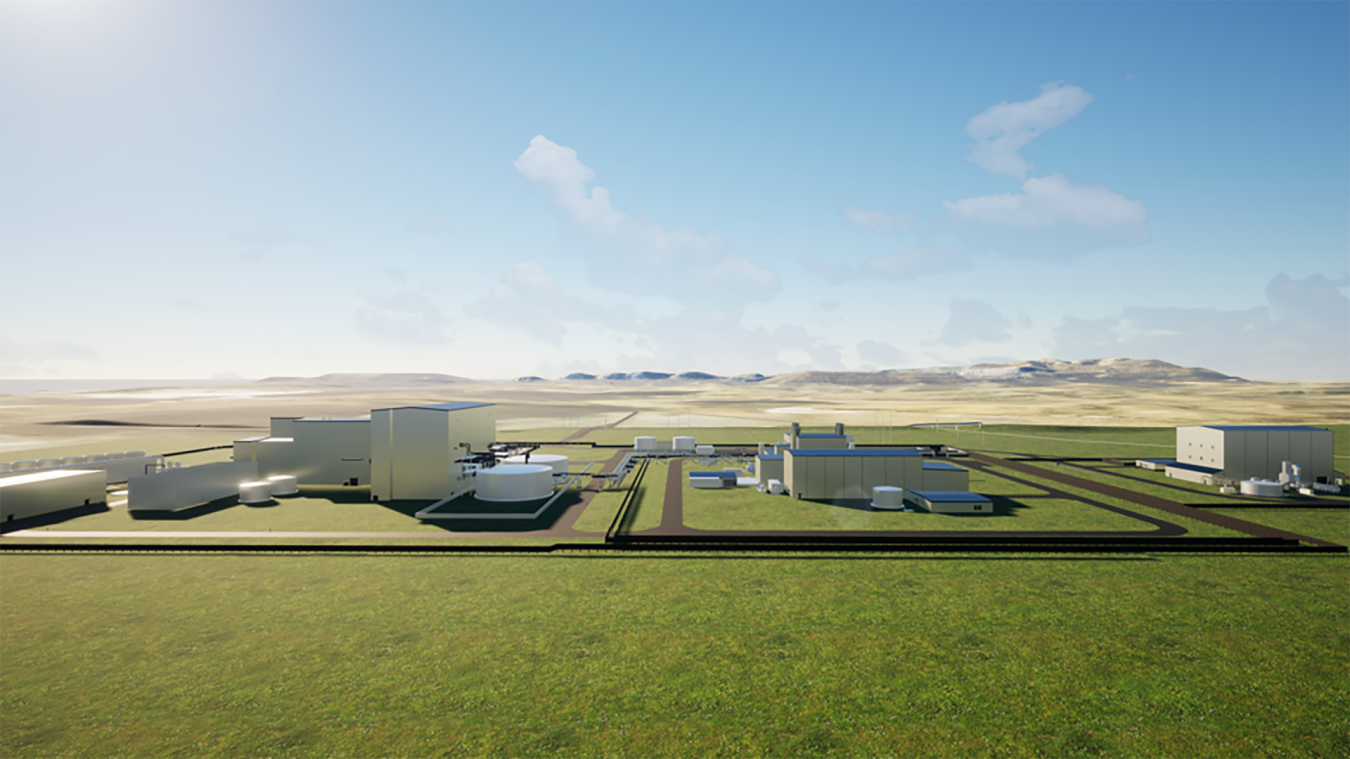
Advanced reactors are not yet operational in the U.S., but experimental reactors using alternative coolants have been operated and are being tested. An advanced facility is being constructed next to a retiring coal plant in Wyoming with plans for operation in 2030. All advanced reactors will be designed to release no harmful radioactive material under normal operations. Reactor cores will be housed inside structures designed to withstand extreme events, and the materials themselves have been intentionally chosen to prevent accidents. After generating electricity, used nuclear fuel will be contained on-site in specialized casks.
→ How does the fission reaction work?
Nuclear fission happens when the nucleus of an atom splits into two or more smaller nuclei and other particles. When a uranium nucleus absorbs an extra neutron, it quickly breaks into two parts, generating heat and radioactive material. In nuclear plants, this heat then boils water inside the reactor and drives steam turbines to make electricity. Water is used to control the chain reactions common in fission and also cool the reactor core.
The radioactive material produced must be contained and stored, as it is long-lasting and will not break down for hundreds of thousands of years. Used fuel is initially stored in large cooling pools and then transferred to on-site steel and concrete casks—effectively shielding radiation while allowing heat to dissipate and some radioactive elements to decay. Most advanced reactor fuel can be reprocessed, but this varies by the type of fuel being used and the status of reprocessing technologies, markets, and policies.
→ What can advanced reactors do?
Advanced reactors have the potential to provide clean, plentiful power with more efficient operations and more passive safety features to prevent accidents. They are modular systems that can be built as a single facility or in a “fleet” of several devices in one location, depending on energy demands. Like many nuclear power designs, advanced reactors are designed to run continuously, producing maximum power capacity for over 90% of their life. Nuclear fuel is incredibly dense, meaning that a small amount of fuel produces a lot of energy output. One uranium fuel pellet—around the size of a thimble—produces as much electricity as one ton of coal, 149 gallons of oil, or 17,000 cubic feet of natural gas.
Advanced reactors incorporate “inherent” safety and efficiency features. For example, operating at a lower pressure can physically eliminate the risk of pressure-related accidents. Some designs can operate at increased temperature and potentially use the heat produced by the reactor to supply industrial processes. Fuel recycling remains a possibility but would require proliferation safeguards.
→ How have advanced reactors been used historically?
Most, but not all, advanced reactor technologies have been operated in a research or demonstration capacity in the U.S. and other countries. Roughly the last 60 years of research has focused on large LWRs, advanced reactors are now being revisited, incorporating more safety features and modern technology. Like older reactor generations, advanced reactors will be extremely fuel-efficient and generate electricity without producing greenhouse gases or other air pollution.
→ Who provides oversight?
Because advanced reactors will utilize “special nuclear materials” as fuel, they will be closely monitored with federal and state oversight. The U.S. Nuclear Regulatory Commission (NRC) oversees all federal nuclear energy licensing and regulation—including technology design, safety, and some siting requirements. These regulations require minimizing potential population exposures to radiation during operation, with emphasis on emergency preparedness.
State agencies provide additional regulatory and permitting oversight from construction through to ongoing facility operations. In Wisconsin, these agencies may include the Public Service Commission, Department of Natural Resources, Department of Health Services, and others.
→ What are the challenges and opportunities?
Advanced reactors face several challenges toward becoming commercially active in the U.S. The success of their designs depends on developing advanced materials that can withstand non-water coolants and higher temperatures. Advanced reactor designs will also require specialized infrastructure, such as dedicated systems for liquid metals. Most advanced reactors will furthermore rely on specialized fuel, which does not yet have a domestic supply chain.
Bringing advanced reactors to Wisconsin could influence workforce and supply chain needs and opportunities. While the scale of these impacts cannot be fully assessed, the U.S. nuclear energy sector is expected to grow nation-wide over the next 25 years to meet clean energy goals and increasing energy demand. All nuclear energy options rely heavily on plant staff to ensure proper function. Most of the operating costs go toward workers rather than fuel. From materials to staffing, advanced reactor facilities could stimulate innovation and create economic opportunities in industries like construction, skilled trades, engineering, manufacturing, business services, and cybersecurity.
→ What are the environmental considerations?
Like all nuclear energy options, advanced reactors would produce zero greenhouse gases or other air pollution. Advanced reactors have a range of cooling options and not all require a location that supplies abundant fresh water. Air-cooled reactors use very little water, while reactors using cooling towers discharge uncontaminated clean water to the atmosphere that is no risk to the general public.
Because nuclear fuel is extremely energy dense, these plants would have a comparatively small carbon footprint and produce more electricity per acre than any other energy source. Nuclear energy can complement other clean energy options like wind and solar by supporting grid resilience and providing consistent power regardless of weather conditions. Advanced designs could take sustainability one step further by using fuel more efficiently, and—depending on the specific reactor technologies—with the potential to reprocess and recycle what is used.