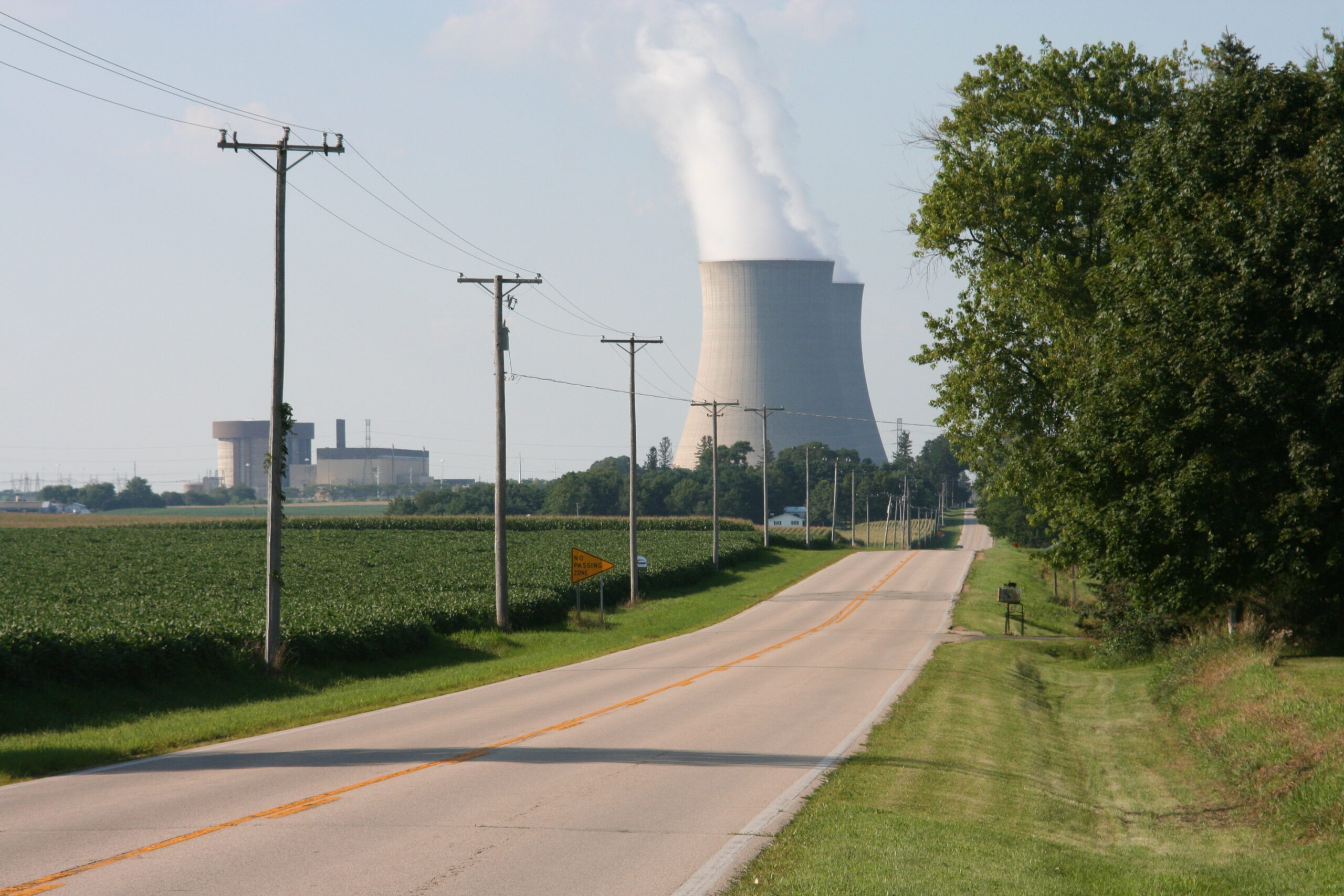
Large Light Water Reactors
→ What are Large LWRs?
Large Light Water Reactors (LWRs) are the utility-scale power plants that use nuclear fission to generate energy—such as the Point Beach Plant in Wisconsin. They use boiling or pressurized water to cool fuel in the core. A typical large LWR can produce enough electricity to power up to 1 million U.S. homes.
Nuclear plants like large LWRs are closed systems that release no harmful radioactive material under normal operations. Reactor cores are housed inside a massive steel and concrete containment dome designed to withstand extreme events, including earthquakes and aircraft impact. After generating electricity, used nuclear fuel is contained on-site in specialized casks.
→ How does the fission reaction work?
Nuclear fission happens when the nucleus of an atom splits into two or more smaller nuclei and other particles. When a uranium nucleus absorbs an extra neutron, it quickly breaks into two parts, generating heat and radioactive material. In nuclear plants, this heat then boils water inside the reactor and drives steam turbines to make electricity. Water is used to control the chain reactions common in fission and also cool the reactor core.
→ What can large LWRs do?
Like many nuclear power designs, large LWRs operate continuously, producing maximum power capacity for over 90% of their life. Nuclear fuel is incredibly dense, meaning that a small amount of fuel produces a lot of energy output. One uranium fuel pellet—around the size of a thimble—produces as much electricity as one ton of coal, 149 gallons of oil, or 17,000 cubic feet of natural gas.
As fission technology becomes more sophisticated, so too does large plant safety. Today’s large LWRs use sophisticated automatic safety systems that do not rely on mechanical pumps or diesel generators.
→ How have large LWRs been used historically?
Large LWRs have been providing clean power to the U.S. since the 1960s. As the only commercial nuclear energy option in the U.S., reactors in 28 states are understood from decades of science and currently provide nearly 20% of the nation’s electricity. They are extremely fuel-efficient and generate electricity without producing greenhouse gases or other air pollution.
Large LWRs can be separated into different generations based on age and technological capabilities. Of the more than 90 reactors operating in the U.S. today, almost all are considered Generation II. The two newest Generation III reactors were completed in 2024. These newest generations of reactors produce electricity more efficiently and have increased safety features compared to earlier designs.
→ Who provides oversight?
Because large LWRs utilize “special nuclear materials” as fuel, they are closely monitored with federal and state oversight. The U.S. Nuclear Regulatory Commission (NRC) oversees all federal nuclear energy licensing and regulation—including technology design, safety, and some siting requirements. These regulations require minimizing potential population exposures to radiation during operation, with emphasis on emergency preparedness.
State agencies provide additional regulatory and permitting oversight from construction through to ongoing facility operations. In Wisconsin, these agencies may include the Public Service Commission, Department of Natural Resources, Department of Health Services, and others.
→ What are the challenges and opportunities?
Cost and construction are the top two challenges to building more large LWR facilities. These major infrastructure projects require significant investment, including high upfront costs, and many years to build and license. Large LWRs also typically require access to a reliable water source for cooling.
Expanding large LWRs in Wisconsin could influence workforce and supply chain needs. While the scale of these impacts is still being evaluated, the U.S. nuclear energy sector is expected to grow nation-wide over the next 25 years to meet clean energy goals and increasing energy demand. From construction to plant staffing, large LWR facilities could create economic opportunities in industries like construction, skilled trades, engineering, manufacturing, business services, and cybersecurity.
→ What are the environmental considerations?
Like all nuclear energy options, large LWRs produce zero greenhouse gases or other air pollution—the clouds seen rising from concrete cooling towers are pure water vapor. Because nuclear fuel is extremely dense, plants have a comparatively small carbon footprint and produce more electricity per acre than any other energy source. Nuclear energy can complement other clean energy options like wind and solar by supporting grid resilience and providing consistent voltage regardless of weather conditions.
The radioactive material produced must be contained and stored, as it is long-lasting and will not break down for hundreds of thousands of years. Used fuel is initially stored in large cooling pools and then transferred to on-site steel and concrete casks—effectively shielding radiation while allowing heat to dissipate and some radioactive elements to decay.